
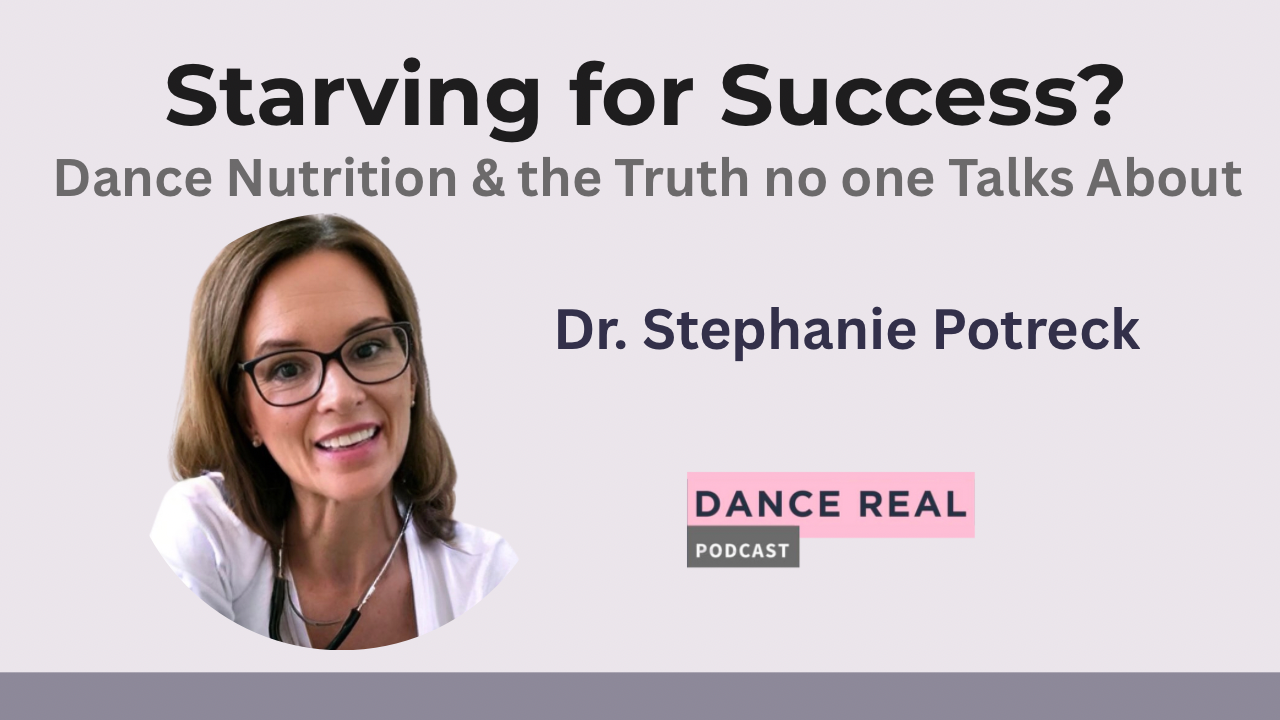
This week on The Dance Real Podcast I had the privilege of speaking with Dr. Stephanie Potrek—a medical doctor and nutritionist who knows dance from the inside out. Her career spans medicine, sports nutrition, and global health, yet it is rooted in her own experience as a dancer.
Stephanie now runs AusDancers Overseas, a virtual clinic supporting dancers through disordered eating and injuries. She’s a strong advocate for healthier training environments and has seen, time and again, how nutrition can make or break a dancer’s career.
Our conversation was eye-opening and, at times, confronting. Here are some of the key insights that stood out.
The Nutrition Crisis in Dance Isn’t New
Did you know research back in 1980 already showed that pre-professional dancers were burning more energy than they consumed? That was more than 40 years ago. The consequences—delayed puberty, higher injury rates, and long-term health issues—were clear even then.
And yet, Stephanie points out, we are still talking about the same problems today. Dancers continue to under-fuel. Injuries are common. Delayed development is still brushed aside. The culture has been slow to change.
Where Does It Start?
Stephanie explained that eating disorders rarely begin in the studio. Home life often lays the groundwork: inconsistent parenting, unmet emotional needs, or pressure to perform. Dance schools then act as a trigger. Comments about body shape, comparisons in class, or “tough love” teaching styles can tip a vulnerable dancer into harmful behaviours.
And then there’s social media. While it can connect dancers globally, it also fuels comparison. Stephanie encourages parents to regularly talk with their children about what they see online—and who they’re following.
Red Flags Teachers and Parents Shouldn’t Ignore
Stephanie shared some simple but critical signs that a dancer might be under-fuelling or struggling:
-
Repeated overuse injuries (like stress fractures).
-
Muscles that always feel sore or weak.
-
Waking up unrefreshed, even after sleep.
-
Training plateaus despite putting in extra effort.
Dancers often think these signs mean they need to push harder, when in reality their bodies are crying out for fuel and rest.
What Healthy Fueling Looks Like
Nutrition for dancers doesn’t need to be complicated. Stephanie broke it down like this:
-
Breakfast: Balanced meals with carbs, protein, and fats—think porridge with nut butter and fruit, or eggs on toast.
-
Snacks: Quick, simple energy like dates, dried fruit, or diluted juice between classes.
-
Lunch: Substantial meals such as sandwiches, grain bowls, or salads with protein.
-
Recovery: A post-class snack (like chocolate milk or a light sandwich) to help muscles repair before dinner.
-
Dinner: A full, balanced meal as soon as possible after evening classes.
Her golden rule: don’t underestimate how much energy recovery takes. Healing injuries, growth, and even concentration in class all require proper fuel.
The Extra Challenge of Moving Overseas
Through AusDancers Overseas, Stephanie also supports dancers making the move to Europe for training. She’s seen the full spectrum: supportive schools with healthcare teams, and others enforcing weekly weigh-ins or using body-shaming tactics.
She stresses the importance of doing research and having honest conversations before a dancer relocates. Housing, food access, healthcare, and even cultural differences all impact whether a dancer thrives or struggles.
A Message for Young Dancers
Perhaps the most powerful piece of advice Stephanie shared was this:
“Don’t let someone else’s false version of you become the defining story about you.”
Teachers, directors, and even peers will all have opinions. The danger comes when dancers internalise those opinions and lose sight of themselves.
Final Reflection
Dance can be beautiful, but it can also be relentless. Without proper fuelling, recovery, and emotional support, the very discipline that builds artistry can become destructive.
Stephanie’s work reminds us that dancers are athletes and artists. Their health is non-negotiable. For parents and teachers, the call is clear: listen, observe, and educate yourselves. True excellence in dance is never built on starvation.